
The Buyer's Guide · Historic Homes & Acreage
Buying a Historic Home With Acreage Near Charleston, SC
By Denise Rush · REALTOR® · EXIT Realty Lowcountry Group
The dream: a historic home with land near Charleston, a slower pace, real character, and room to breathe. The reality: these properties come with a different set of questions than a new-construction home, and the answers determine whether the dream is a joy or a project.
This guide walks through what to check before you buy, community by community and system by system, with a practical checklist at the end. It is education first and pressure free, written by Denise Rush, a REALTOR® with EXIT Realty Lowcountry Group who serves Charleston, Berkeley, and Dorchester counties. It is one part of the full buying guide, focused on the questions that only come up when the home is older and the land is yours.
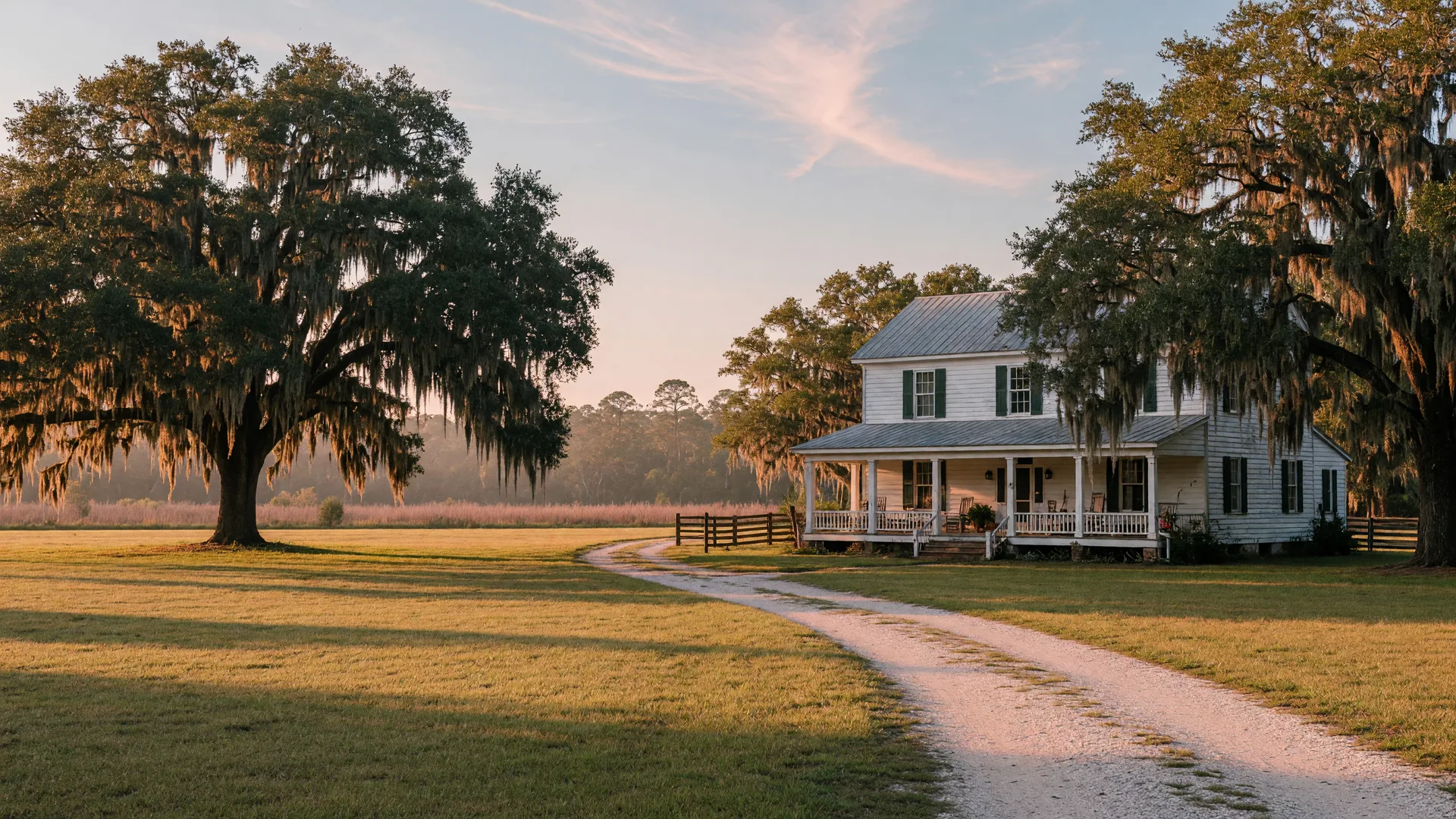
The Communities · Where to Look
Where to Look: Summerville, Moncks Corner, Ridgeville, and Nearby Rural Communities
Historic homes with acreage cluster in different corners of the Tri-County, and each community has its own zoning, flood, and utility picture. Here is the honest, general version of each, with the note that every property needs its own verification.
Summerville · Dorchester County
An established town with a historic core
Summerville is an established town in Dorchester County known for its historic district and tree-lined streets, with a range of older homes and some larger lots on the outskirts. Its historic character is part of the appeal; if the home is in a historic district, preservation rules apply, covered in the preservation section below. Verify current town ordinances and zoning for specifics, and see the Summerville neighborhood guide for the day-to-day picture.
Moncks Corner · Berkeley County
The county seat, lakes, and rural acreage
Moncks Corner is the seat of Berkeley County, near Lake Moultrie and the Santee Cooper lakes, surrounded by rural acreage and equestrian-style properties. It is a more country setting with a shorter drive to Charleston than many realize. Verify current county zoning and utility availability by address before you fall for a particular piece of land.
Ridgeville · Dorchester County
A small community on the I-26 corridor
Ridgeville is a small Dorchester County community along the I-26 corridor between Summerville and the coast-to-Columbia route, with rural parcels and older farmhouses. Growth in the corridor has brought new attention to the area, so verify current road, utility, and zoning details for the specific property.
Nearby Rural Communities
The broader rural picture
The broader picture includes rural parts of Dorchester, Berkeley, and Colleton counties, plus communities like Harleyville, St. George, Huger, and Cottageville, where acreage and older homes are more common and public utilities often are not. Each has its own zoning, flood, and utility picture, so verify per property.
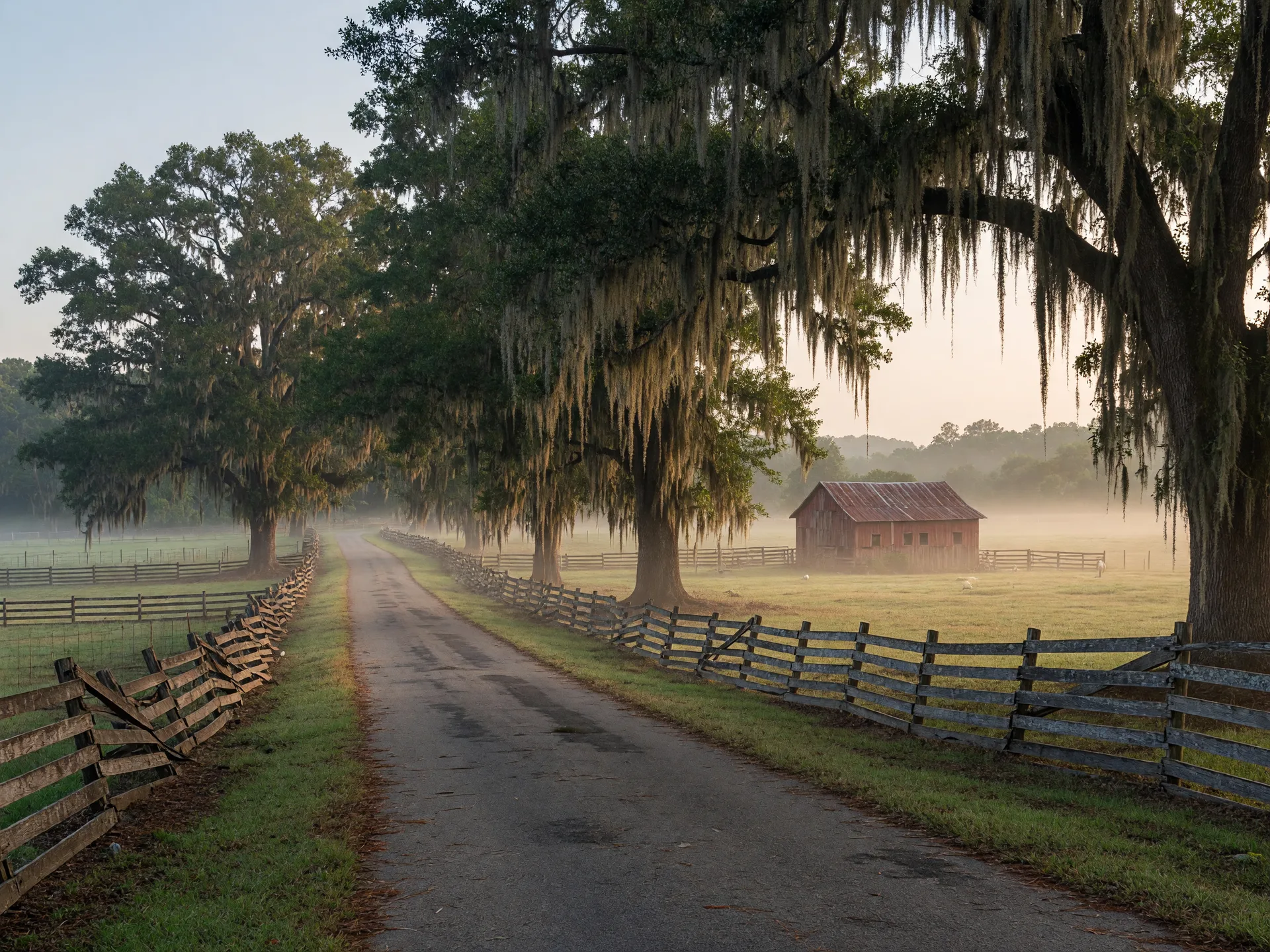
The honest note
"Historic" and "acreage" mean different things in different places, and the condition of the systems matters far more than the charm of the photos. Every property needs its own verification.
That is the thread running through this whole guide: the character of the home draws you in, and the inspections, zoning, flood map, and utility records tell you whether it is a sound purchase. Do both before you commit.
Inspections · The Start, Not the Finish
Property Inspections: What a Historic Home With Land Needs
The standard home inspection is the start, not the finish. For an older home, plan on specialists, because age hides its problems in places a general inspection is not designed to reach.
For an older home, add to the general inspection: a structural inspection covering the foundation, framing, and roof structure; an electrical review of older wiring, panels, and any knob-and-tube; a plumbing check of old pipes and the water heater; the age and condition of the HVAC; and a wood-destroying insect inspection, the termite letter, which is common and often required in South Carolina.
For the land, add four things: a septic inspection and well water testing, covered below; a survey to confirm boundaries and any easements; and a check of outbuildings, barns, sheds, and guest houses, both for condition and for whether they are permitted and legal. An unpermitted structure can be a surprise expense or a code problem after closing.
This is general guidance. Hire qualified, licensed inspectors and specialists, and read every report with your agent so the findings become negotiation points, not closing-day surprises. For the other end of the spectrum, the new-construction inspection walkthrough in what to inspect on a brand-new house in Cane Bay or Nexton shows how different the checklist is when the house is fresh off the builder.
The older-home add-ons
- Structural: foundation, framing, roof structure
- Electrical: older wiring, panels, knob-and-tube
- Plumbing: old pipes, water heater, visible leaks
- HVAC: age, condition, and remaining life
- Wood-destroying insect inspection (termite letter)
The land add-ons
- Septic inspection and well water testing
- Survey: boundaries, easements, encroachments
- Outbuildings: condition, permits, and legality
Septic · Yours to Own and Maintain
Septic Systems: What to Verify Before You Buy
Rural acreage usually means no public sewer, so the septic system is yours. That makes it one of the most important systems on the property, and one of the most expensive to get wrong.
In South Carolina, septic systems require site approval and permits from SCDES, the SC Department of Environmental Services, formerly DHEC, and the system must meet separation distances. Per SCDES guidance, those distances are roughly 75 feet from a private well, 75 feet from surface water, 5 feet from buildings and property lines, and 25 feet from drainage ditches. Verify the current guidance for the property you are considering.
South Carolina does not mandate a septic inspection at the time of sale, but FHA and VA financing almost always require one, and a buyer who skips it can inherit an expensive problem. Ask for the permit and as-built records, have the tank inspected and pumped by a licensed professional, and check the drain field. Sellers must disclose known septic issues under the SC Residential Property Condition Disclosure Act.
This is general guidance to verify with SCDES and a licensed septic professional before you rely on it for a specific property.
Separation distances, per SCDES guidance
- Roughly 75 feet from a private well
- Roughly 75 feet from surface water
- 5 feet from buildings and property lines
- 25 feet from drainage ditches
General guidance only. Confirm current SCDES requirements for the specific site.
Wells & Water · Test Before You Commit
Wells and Water: Testing Before You Commit
No public water means a private well, and the well is a system you will live with every day. Verify it before the offer, not after the closing.
Confirm the well itself
Verify the well exists, is permitted, and is in good condition. Know its depth, age, and flow rate, and confirm it serves the house and any irrigation you plan.
Test the water
Have the water tested by a certified lab for bacteria, nitrates, and any local concerns, such as arsenic or metals in some areas. Test results belong in the due diligence file.
Respect the separation
The well's separation from the septic system matters, roughly 75 feet per SCDES guidance, and the layout of both systems on the property should make sense before you buy.
This is general guidance to verify with SCDES and a licensed well contractor. A well that fails a test or a flow check can be fixable, but the cost belongs in your budget, not in a surprise.
Zoning · What the Land Allows
Zoning: What You Can Actually Do With the Land
Acreage is only as useful as what the zoning allows. The same five acres can be a horse property, a small farm, a home with a workshop, or land that cannot be touched, depending on the zone.
Check the county or town zoning classification, the minimum lot sizes, the setbacks, and what is permitted: outbuildings, barns, livestock, home-based businesses, additional dwellings, or subdivision of the land. If the property is in an agricultural or rural-residential zone, the rules differ from suburban zones.
A quick call to the local planning or zoning office answers most of this before you make an offer. It is a ten-minute conversation that can save you from buying land you cannot use the way you planned. This is general guidance; verify per property.
What to ask the zoning office
- Zoning classification and minimum lot size
- Setbacks for the house and outbuildings
- Livestock, barns, and agricultural uses
- Home-based businesses and additional dwellings
- Whether the land can be subdivided
Flood & Drainage · Know the Ground Before the Rain
Flood Risk and Drainage: Know the Ground Before the Rain
The Lowcountry's charm comes with water, and water finds the low ground. Check the map, walk the land, and ask about drainage before you fall in love.
Check the FEMA flood map
Look up the property's zone on the FEMA flood map. High-risk zones, labeled A and AE, carry a 1 percent annual flood chance, and flood insurance is mandatory when a federally backed mortgage is used. Even in lower-risk Zone X, flood insurance is optional but worth considering on rural property near creeks and rivers.
Walk the land after rain
If you can, walk the property after a good rain and ask the seller about drainage, standing water, and road access in wet weather. A driveway that floods once a year is a fact about the property, and it is better to learn it before the offer than after.
The insurance reality
Standard homeowners insurance does not cover flood damage in South Carolina. Flood coverage is separate, through the NFIP or a private carrier, and it is worth quoting before you make an offer. This is general guidance; verify with the FEMA maps, the local floodplain manager, and an insurance agent.
Insurance · Quote It Early
Insurance: Historic Homes and Rural Property
Insuring an older home with acreage is different from insuring a newer subdivision house, and the difference can show up in the premium, the coverage, or both.
Replacement cost for historic materials can be higher, some carriers limit coverage on older homes, and rural properties may need separate coverage for outbuildings, farm equipment, or liability. Flood and wind coverage are separate considerations in coastal South Carolina.
Work with an experienced insurance agent early, ideally before you make an offer, so the cost is no surprise. A premium that changes your monthly math is exactly the kind of thing to learn in the shopping phase. This is general guidance; verify with an insurance professional.
Where rural insurance differs
- Replacement cost for historic materials runs higher
- Some carriers limit coverage on older homes
- Outbuildings, farm equipment, and liability may be separate
- Flood and wind coverage are separate in coastal SC
Preservation · What 'Historic' Actually Means
Preservation Restrictions: What 'Historic' Actually Means
Two very different things, and buyers confuse them all the time. Whether a home is 'historic' on paper and whether the town restricts what you can do to it are separate questions.
National Register listing
A National Register listing, such as the Summerville Historic District, is honorary and does not restrict what owners do with their property. It can open the door to certain tax incentives for rehabilitation, which is a genuine benefit worth asking about.
Local historic district
A local historic district is a zoning overlay enacted by the town or county, and it does restrict exterior changes. The local board typically must approve alterations, additions, demolition, and sometimes paint and materials. If the home is in a local historic district, find out exactly what the rules are before you plan renovations.
Also check for conservation or preservation easements on the property, which can permanently restrict use and development, and for historic tax credit programs, which can help offset rehabilitation costs. This is general guidance; verify with the local planning office, the SC State Historic Preservation Office, SCDAH/SHPO, and a real estate attorney.
Commuting · The Real Drive
Commuting Considerations: The Real Drive
Approximate and honest, with no exact promises: the distances are real, and the traffic is the variable. Do the drive before you commit.
Summerville to downtown Charleston is roughly 25 to 30 miles via I-26. Ridgeville sits along the I-26 corridor at a similar distance. Moncks Corner is roughly 35 miles via US-52 and I-26. More distant rural communities add time from there.
Traffic at rush hour, especially on I-26 toward Charleston, can stretch drive times considerably, and rural roads can be slower in weather. If you will commute, do the drive at the actual times you would, and factor in school bus routes, medical access, and how far the nearest grocery, hardware store, and hospital really are.
These are approximations to verify with maps and a test drive. For the full framework on choosing where to live by commute, see relocating to Charleston and choosing your area by commute.
Approximate distances
- Summerville to downtown Charleston: roughly 25 to 30 miles via I-26
- Ridgeville: along the I-26 corridor at a similar distance
- Moncks Corner: roughly 35 miles via US-52 and I-26
- More distant rural communities add time
Approximate figures to verify with maps and a test drive at your real commute times.
The Checklist · Step by Step
The Practical Buyer Checklist
Twelve steps, in order, for buying a historic home with acreage near Charleston. Print it, keep it with the due diligence file, and check each item off with your agent.
- 01
Confirm the legal description and get a survey: boundaries, easements, and encroachments.
- 02
Check the FEMA flood zone and talk to an insurance agent about flood, wind, and homeowners coverage.
- 03
Verify zoning: what is allowed, minimum lot size, setbacks, outbuildings, livestock, and subdivision.
- 04
Order a full home inspection plus structural, electrical, plumbing, and wood-destroying insect inspections.
- 05
Have the septic system inspected and pumped by a licensed professional; get the permit and as-built records.
- 06
Test the well water at a certified lab; confirm the well's age, depth, flow, and permit.
- 07
Check the property's historic status: National Register versus local historic district, and any easements.
- 08
Verify utilities: power, internet, and whether public water or sewer is available or planned.
- 09
Drive the commute at real times; check school routes, medical access, and the nearest services.
- 10
Review the title, deed restrictions, and any HOA or agricultural covenants with a real estate attorney.
- 11
Get a seller's disclosure and read it carefully; ask about known septic, well, roof, and termite issues.
- 12
Budget beyond the purchase price: repairs, well and septic work, insurance, taxes, and a contingency fund.
Asked & Answered
Questions Buyers Ask About Historic Homes With Acreage
The questions that come up again and again, answered in plain language. Each answer is general education to verify with the agency or professional named in the guide.
Is flood insurance required for a historic home with acreage near Charleston?
Flood insurance is mandatory when a federally backed mortgage is used on a home in a high-risk FEMA flood zone, such as Zone A or AE. In lower-risk Zone X it is optional, but on rural property near creeks and rivers it is often worth considering. Standard homeowners insurance does not cover flood damage in South Carolina; flood coverage is separate, through the NFIP or a private carrier. Verify the property's zone on the FEMA flood map and confirm the requirements with your lender and an insurance agent.
Do I need a septic inspection when buying in SC?
South Carolina does not mandate a septic inspection at the time of sale, but FHA and VA financing almost always require one, and a buyer who skips it can inherit an expensive problem. Have the tank inspected and pumped by a licensed professional, ask for the permit and as-built records, and check the drain field. Sellers must disclose known septic issues under the SC Residential Property Condition Disclosure Act.
What does 'historic' mean for restrictions on my home?
It depends on the type of designation. A National Register listing, such as the Summerville Historic District, is honorary and does not restrict what owners do with their property, though it can open the door to certain rehabilitation tax incentives. A local historic district is a zoning overlay enacted by the town or county, and it does restrict exterior changes, with the local board typically approving alterations, additions, demolition, and sometimes paint and materials. Conservation or preservation easements can also permanently restrict use and development. Verify the exact status with the local planning office, the SC State Historic Preservation Office (SCDAH/SHPO), and a real estate attorney.
Are wells and septic systems regulated in South Carolina?
Yes. In South Carolina, septic systems require site approval and permits from SCDES, the SC Department of Environmental Services, formerly DHEC, and the system must meet separation distances from wells, buildings, property lines, and surface water. Private wells are also regulated, and the water should be tested by a certified lab for bacteria, nitrates, and any local concerns. Verify current requirements with SCDES and with licensed well and septic professionals.
What should I check before buying acreage near Charleston?
Start with the legal description and a survey, the FEMA flood zone, and the zoning, then move to the systems: a full home inspection plus structural, electrical, plumbing, and wood-destroying insect inspections, a septic inspection and pumping, and well water testing. Confirm the property's historic status and any easements, verify utilities, drive the commute at real times, and review the title and deed restrictions with a real estate attorney. The 12-point checklist in this guide walks through each step.
How far is Summerville from Charleston?
Summerville is roughly 25 to 30 miles from downtown Charleston via I-26. Ridgeville sits along the same corridor at a similar distance, and Moncks Corner is roughly 35 miles via US-52 and I-26. Traffic at rush hour, especially on I-26 toward Charleston, can stretch drive times considerably, so do the drive at the times you would actually commute.
The Close · No Pressure
A rewarding purchase, when the systems check out
Buying a historic home with acreage is one of the most rewarding purchases in the Charleston area when the systems, zoning, and land all check out, and one of the most stressful when they do not. The difference is almost always the due diligence you do before the offer.
Denise is happy to help buyers understand the neighborhood picture, connect with the right inspectors and lenders, and walk through the checklist, with no pressure. Call (843) 814-5454 or book a 30-minute consultation to start the conversation.
Keep reading
A note on this guide
Everything here is general educational information for buying a historic home with acreage near Charleston. Verify every legal, regulatory, tax, and insurance point with the relevant agency, a qualified inspector, an insurance agent, an attorney, or a lender before relying on it. Nothing in this guide is a guarantee.